Shop at the MoonViews Store

LOIRP
- About
- Contact


RECOMMENDED BOOKS

Moonrush: Improving Life on Earth with the Moon's Resources

The Kaguya Lunar Atlas: The Moon in High Resolution

Lunar Reconnaissance Orbiter Mission

Lunar Orbiter Photographic Atlas of the Near Side of the Moon

The Far Side of the Moon: A Photographic Guide

The Clementine Atlas of the Moon

The International Atlas of Lunar Exploration

Voices from the Moon: Apollo Astronauts Describe Their Lunar Experiences

Apollo: Through the Eyes of the Astronauts

Main

Lunar Orbiter 2 ("II" or "B") Archives

July 23, 2011

Has The Lunar Orbiter 2 Impact Site Been Found by LRO?

An odd-looking impact feature raises an intriguing, Apollo-era trivia question (3.02°S, 119.15°E). NAC image number M141485413; incidence angle 12°; Sun is from the east; north is up; image is ~600 meters across [NASA/GSFC/Arizona State University].

Lunar Orbiter 2 was an unmanned imaging spacecraft used in November and early December 1966 to aid with Apollo and Surveyor landing site selection. The spacecraft became famous in 1967 with the public release of an oblique image of Copernicus crater (one of only four obliques collected), which was hailed as the "Picture of the Century" by the news media of the day. According to the 2007 International Atlas of Lunar Exploration, the Lunar Orbiter 2 spacecraft was commanded to crash into the lunar farside surface on October 11, 1967.

The coordinates of the Lunar Orbiter 2 impact are given as 119.1° east longitude and 3.0° north latitude, which match those of the feature in the NAC image (measured at 119.149° east longitude, and 3.020° north latitude). However, the published Lunar Orbiter 2 numbers are given as a rough estimate because the impact occurred on the farside of the Moon, out of direct radio contact. So the match with the NAC coordinates could be a coincidence.

The impact appears much too large (~85 m in diameter) to be the result of an impact from a spacecraft only a few meters tall, but with a solar incidence angle of only 12 degrees, it is difficult to see the crater rim and find out the true diameter. Perhaps the ejecta pattern extends far beyond the immediate impact. The truth is that we are not sure what caused this impact feature. We are currently re-targeting the area under a higher incidence angle to help with crater rim measurements. Stay tuned!

More

July 22, 2011

Lunar Orbiter 2 Frame 2046_H2

This newly retrieved high resolution image, frame 2046_H2, was taken by Lunar Orbiter 2 on 19 November 1966 at 15:44:28 GMT LPI reference Images: [large] [Very Large]

July 21, 2011

Lunar Orbiter 2 Frame 2199_H3

This newly retrieved high resolution image, frame 2199_H3, was taken by Lunar Orbiter 2 on 25 November 1966 at 07:21:17 GMT LPI reference Images: [large] [Very Large]

July 20, 2011

Lunar Orbiter 2 Frame 2198_M

This newly retrieved high resolution image, frame 2198_M, was taken by Lunar Orbiter 2 on 25 November 1966 at 07:21:15 GMT LPI reference Images: [large] [Very Large]

July 18, 2011

Lunar Orbiter 2 Frame 2197_H3

This newly retrieved high resolution image, frame 2197_H3, was taken by Lunar Orbiter 2 on 25 November 1966 at 07:21:13 GMT LPI reference Images: [large] [Very Large]

July 14, 2011

Lunar Orbiter 2 Frame 2195_H2

This newly retrieved high resolution image, frame 2195_H2, was taken by Lunar Orbiter 2 on 25 November 1966 at 00:22:55 GMT LPI reference Images: [large] [Very Large]

July 11, 2011

Lunar Orbiter 2 Frame 2195_H1

This newly retrieved high resolution image, frame 2195_H1, was taken by Lunar Orbiter 2 on 25 November 1966 at 00:22:55 GMT LPI reference Images: [large] [Very Large]

July 7, 2011

Lunar Orbiter 2 Frame 2177_H3

This newly retrieved high resolution image, frame 2177_H3, was taken by Lunar Orbiter 2 on 24 November 1966 at 10:33:09 GMT LPI reference Images: [large] [Very Large]

July 5, 2011

Lunar Orbiter 2 Frame 2177_H1

This newly retrieved high resolution image, frame 2177_H1, was taken by Lunar Orbiter 2 on 24 November 1966 at 10:33:09 GMT LPI reference Images: [large] [Very Large]

July 1, 2011

Lunar Orbiter 2 Frame 2011_M

This medium resolution image, frame 2011_M, was taken by Lunar Orbiter 2 on 18 November 1966 at 15:25:05 GMT LPI reference Images: [Large] [Very Large]

June 29, 2011

Lunar Orbiter 2 frame 2013_M

This newly retrieved medium resolution image, frame 2013_M, was taken by Lunar Orbiter 2 on 18 November 1966 at 15:25:09 GMT LPI reference Images: [Medium]

June 28, 2011

Lunar Orbiter 2 Frame 2177_H2

This newly retrieved high resolution image, frame 2177_H2, was taken by Lunar Orbiter 2 on 24 November 1966 at 10:33:09 GMT LPI reference Images: [large] [Very Large]

June 27, 2011

Lunar Orbiter 2 Frame 2175_H2

This newly retrieved high resolution image, frame 2175_H2, was taken by Lunar Orbiter 2 on 24 November 1966 at 10:33:04 GMT LPI reference Images: [large] [Very Large]

Lunar Orbiter 2 Frame 2018_H1

This newly retrieved high resolution image, frame 2018_H1, was taken by Lunar Orbiter 2 on 18 November 1966 at 15:25:20 GMT LPI reference Images: [large] [Very Large]

Lunar Orbiter 2 Frame 2018_H2

This newly retrieved resolution image, frame 2018_H2, was taken by Lunar Orbiter 2 on 18 November 1966 at 15:25:20 GMT LPI reference Images: [large] [Very Large]

June 24, 2011

Lunar Orbiter 2 Frame 2173_H2

This newly retrieved high resolution image, frame 2173_H2, was taken by Lunar Orbiter 2 on 24 November 1966 at 10:33:04 GMT LPI reference Images: [large] [Very Large]

June 23, 2011

Lunar Orbiter 2 Frame 2175_H1

This newly retrieved high resolution image, frame 2175_H1, was taken by Lunar Orbiter 2 on 24 November 1966 at 10:32:59 GMT LPI reference Images: [large] [Very Large]

June 22, 2011

Lunar Orbiter 2 Frame 2173_H1

This newly retrieved high resolution image, frame 2173_H1, was taken by Lunar Orbiter 2 on 24 November 1966 at 10:32:59 GMT LPI reference Images: [large] [Very Large]

June 21, 2011

Lunar Orbiter 2 Frame 2172_H2

This newly retrieved high resolution image, frame 2172_H2, was taken by Lunar Orbiter 2 on 24 November 1966 at 10:32:56 GMT LPI reference Images: [large] [Very Large]

June 20, 2011

Lunar Orbiter 2 Frame 2157_H2

This newly retrieved high resolution image, frame 2157_H2, was taken by Lunar Orbiter 2 on 23 November 1966 at 17:05:35 GMT LPI reference Images: [large] [Very Large]

June 17, 2011

Lunar Orbiter 2 Frame 2148_H2

This newly retrieved high resolution image, frame 2148_H2, was taken by Lunar Orbiter 2 on 23 November 1966 at 13:36:28 GMT LPI reference Images: [large] [Very Large]

June 16, 2011

Lunar Orbiter 2 Frame 2157_H1

This newly retrieved high resolution image, frame 2157_H1, was taken by Lunar Orbiter 2 on 23 November 1966 at 17:05:35 GMT LPI reference Images: [large] [Very Large]

June 15, 2011

Lunar Orbiter 2 Frame 2148_H1

This newly retrieved high resolution image, frame 2148_H1, was taken by Lunar Orbiter 2 on 23 November 1966 at 13:36:28 GMT LPI reference Images: [large] [Very Large]

June 14, 2011

Lunar Orbiter 2 Frame 2129_H2

This newly retrieved high resolution image, frame 2129_M, was taken by Lunar Orbiter 2 on 22 November 1966 at 23:47:13 GMT LPI reference Images: [large] [Very Large]

June 13, 2011

Lunar Orbiter 2 Frame 2129_H1

This newly retrieved high resolution image, frame 2129_H1, was taken by Lunar Orbiter 2 on 22 November 1966 at 23:47:13 GMT LPI reference Images: [large] [Very Large]

June 10, 2011

Lunar Orbiter 2 Frame 2130_H3

This newly retrieved high resolution image, frame 2130_H3, was taken by Lunar Orbiter 2 on 22 November 1966 at 23:47:13 GMT LPI reference Images: [large] [Very Large]

June 9, 2011

Lunar Orbiter 2 Frame 2128_M

This newly retrieved high resolution image, frame 2128_M, was taken by Lunar Orbiter 2 on 19 November 1966 at 20:18:27 GMT LPI reference Images: [large] [Very Large]

June 8, 2011

Lunar Orbiter 2 Frame 2115_H3

This newly retrieved high resolution image, frame 2115_H3, was taken by Lunar Orbiter 2 on 22 November 1966 at 16:49:13 GMT LPI reference Images: [large] [Very Large]

June 7, 2011

Lunar Orbiter 2 Frame 2115_H2

This newly retrieved high resolution image, frame 2115_H2, was taken by Lunar Orbiter 2 on 22 November 1966 at 16:49:13 GMT LPI reference Images: [large] [Very Large]

June 5, 2011

Lunar Orbiter 2 Frame 2086_H2

This newly retrieved high resolution image, frame 2086_H2, was taken by Lunar Orbiter 2 on 20 November 1966 at 19:37:53 GMT LPI reference Images: [large] [Very Large]

June 2, 2011

Lunar Orbiter 2 Frame 2081_M

This newly retrieved high resolution image, frame 2081_M, was taken by Lunar Orbiter 2 on 20 November 1966 at 16:16:08 GMT LPI reference Images: [large] [Very Large]

June 1, 2011

Lunar Orbiter 2 Frame 2051_M

This newly retrieved high resolution image, frame 2051_M, was taken by Lunar Orbiter 2 on 19 November 1966 at 19:13:24 GMT LPI reference Images: [large] [Very Large]

May 31, 2011

Lunar Orbiter 2 Frame 2063_H2

This newly retrieved high resolution image, frame 2063_H2, was taken by Lunar Orbiter 2 on 19 November 1966 at 22:41:08 GMT LPI reference Images: [large] [Very Large]

April 9, 2011

Lunar Orbiter 2 subframe 2031_H

This high resolution image, subframe 2031_H, was taken by Lunar Orbiter 2 on 18 November 1966 at 22:23:16 GMT LPI reference Images: [Large]

Lunar Orbiter 2 subframe 2033_H1

This newly retrieved high resolution image, subframe 2033_H1, was taken by Lunar Orbiter 2 on 19 November 1966 at 02:54:26 GMT LPI reference Images: [large]

July 15, 2010

Lunar Orbiter 2 subframe 2134_H1

This high resolution image, subframe 2134_H1, was taken by Lunar Orbiter 2 on 22 November 1966 at 23:47:25 GMT LPI reference Images: [Medium] [Large]

Lunar Orbiter 2 subframe 2134_H2

This high resolution image, subframe 2134_H2, was taken by Lunar Orbiter 2 on 22 November 1966 at 23:47:25 GMT LPI reference Images: [Medium] [Large]

Lunar Orbiter 2 subframe 2134_H3

This high resolution image, subframe 2134_H3, was taken by Lunar Orbiter 2 on 22 November 1966 at 23:47:25 GMT LPI reference Images: [Medium] [Large]

June 20, 2010

Video: Zoom in On The Restored Copernicus "Picture of the Century"

This high resolution image, subframe 2162_H3, was taken by Lunar Orbiter 2 on 24 November 1966 at 00:05:42 GMT. The crater Copernicus is shown at an oblique angle. This video is from an enhanced version of the original image produced by the Lunar Orbiter Image Recovery Project (LOIRP). Using better-tuned equipment and experience gained along the way, we decided to make a second pass at this wonderous photo. The result was worth the effort.

The original high resolution subframes can be seen below - or here: subframe 2162_H3, subframe 2162_H2, subframe 2162_H1

LOIRP Releases Enhanced Restored Version of the "Image of the Century" Plus Additional Subframes of Crater Copernicus, August 2009

Newly Restored "Picture of the Century": Lunar Orbiter 2's View of Copernicus, August 2009

Lunar Orbiter 2 subframe 2162_H3 - Crater Copernicus Restored "Picture of the Century" Version 2.0

This high resolution image, subframe 2162_H3, was taken by Lunar Orbiter 2 on 24 November 1966 at 00:05:42 GMT LPI reference Images: [Medium] [Large]

Lunar Orbiter 2 subframe 2162_H2 - Crater Copernicus

This high resolution image, subframe 2162_H2, was taken by Lunar Orbiter 2 on 24 November 1966 at 00:05:42 GMT LPI reference Images: [Medium] [Large]

Lunar Orbiter 2 subframe 2162_H1 - Crater Copernicus

This high resolution image, subframe 2162_H1, was taken by Lunar Orbiter 2 on 24 November 1966 at 00:05:42 GMT LPI reference Images: [Medium] [Large]

Lunar Orbiter 2 subframe 2132_H1

This high resolution image, subframe 2132_H1, was taken by Lunar Orbiter 2 on 22 November 1966 at 23:47:20 GMT LPI reference Images: [Medium] [Large]

Lunar Orbiter 2 subframe 2132_H2

This high resolution image, subframe 2132_H2, was taken by Lunar Orbiter 2 on 22 November 1966 at 23:47:20 GMT LPI reference Images: [Medium] [Large]

Lunar Orbiter 2 subframe 2132_H3

This high resolution image, subframe 2132_H3, was taken by Lunar Orbiter 2 on 22 November 1966 at 23:47:20 GMT LPI reference Images: [Medium] [Large]

June 3, 2010

Lunar Orbiter 2 frame 2149_M

This medium resolution image, frame 2126_M, was taken by Lunar Orbiter 2 on 23 November 1966 at 13:36:30 GMT LPI reference Images: [Medium] [Large]

Lunar Orbiter 2 frame 2132_M

This medium resolution image, frame 2126_M, was taken by Lunar Orbiter 2 on 22 November 1966 at 23:47:20 GMT LPI reference Images: [Medium] [Large]

Lunar Orbiter 2 frame 2127_M

This medium resolution image, frame 2127_M, was taken by Lunar Orbiter 2 on 22 November 1966 at 20:18:25 GMT LPI reference Images: [Medium] [Large]

June 1, 2010

More Boulders

This high resolution image, subframe 2128_H2, was taken by Lunar Orbiter 2 on 22 November 1966 at 20:18:27 GMT. Two areas containing craters filled with boulders have been highlighted. Enlarged versions of these locations are shown below. With a resolution of approximately 1 meter/pixel, the smallest boulders visible are several meters across.

LPI reference Images: [Medium] [Large]

Click on image to enlarge

Click on image to enlarge

Lunar Orbiter 2 subframe 2128_H1

This high resolution image, subframe 2128_H1, was taken by Lunar Orbiter 2 on 22 November 1966 at 20:18:27 GMT LPI reference Images: [Medium] [Large]

Lunar Orbiter 2 subframe 2128_H2

This high resolution image, subframe 2128_H2, was taken by Lunar Orbiter 2 on 22 November 1966 at 20:18:27 GMT LPI reference Images: [Medium] [Large]

Lunar Orbiter 2 subframe 2128_H3

This high resolution image, subframe 2128_H3, was taken by Lunar Orbiter 2 on 22 November 1966 at 20:18:27 GMT LPI reference Images: [Medium] [Large]

May 26, 2010

Lunar Orbiter 2 subframe 2151_H1

This high resolution image, subframe 2151_H1, was taken by Lunar Orbiter 2 on 23 November 1966 at 13:36:34 GMT LPI reference Images: [Medium] [Large]

Lunar Orbiter 2 subframe 2151_H2

This high resolution image, subframe 2151_H2, was taken by Lunar Orbiter 2 on 23 November 1966 at 13:36:34 GMT LPI reference Images: [Medium] [Large]

Lunar Orbiter 2 subframe 2151_H3

This high resolution image, subframe 2151_H3, was taken by Lunar Orbiter 2 on 23 November 1966 at 13:36:34 GMT LPI reference Images: [Medium] [Large]

Lunar Orbiter 2 subframe 2133_H1

This high resolution image, subframe 2133_H1, was taken by Lunar Orbiter 2 on 23 November 1966 at 23:47:22 GMT LPI reference Images: [Medium] [Large]

Lunar Orbiter 2 subframe 2133_H2

This high resolution image, subframe 2133_H2, was taken by Lunar Orbiter 2 on 23 November 1966 at 23:47:22 GMT LPI reference Images: [Medium] [Large]

Lunar Orbiter 2 subframe 2133_H3

This high resolution image, subframe 2133_H3, was taken by Lunar Orbiter 2 on 23 November 1966 at 23:47:22 GMT LPI reference Images: [Medium] [Large]

May 21, 2010

Boulders in Lunar Orbiter 2 subframe 2111_H3

Click on image to enlarge.

This high resolution image, subframe 2111_H3, was taken by Lunar Orbiter 2 on 22 November 1966 at 13:49:11 GMT. As you can see from this full resolution enlargement, objects as small as a meter or two in size can be seen when the resolution of the original image is approx. 1 meter/pixel. The image below shows the location of this enlarged area.

Click on image to enlarge.

Lunar Orbiter 2 frame 2126_M

This medium resolution image, frame 2126_M, was taken by Lunar Orbiter 2 on 22 November 1966 at 20:18:23 GMT LPI reference Images: [Medium] [Large]

Lunar Orbiter 2 subframe 2114_H3

This high resolution image, subframe 2114_H3, was taken by Lunar Orbiter 2 on 22 November 1966 at 16:49:11 GMT LPI reference Images: [Medium] [Large]

Lunar Orbiter 2 subframe 2114_H2

This high resolution image, subframe 2114_H2, was taken by Lunar Orbiter 2 on 22 November 1966 at 16:49:11 GMT LPI reference Images: [Medium] [Large]

Lunar Orbiter 2 subframe 2114_H1

This high resolution image, subframe 2114_H1, was taken by Lunar Orbiter 2 on 22 November 1966 at 16:49:11 GMT LPI reference Images: [Medium] [Large]

May 6, 2010

Lunar Orbiter 2 subframe 2112_H3

This high resolution image, subframe 2111_H3, was taken by Lunar Orbiter 2 on 22 November 1966 at 13:49:11 GMT LPI reference Images: [Medium] [Large]

Lunar Orbiter 2 subframe 2112_H2

This high resolution image, subframe 2111_H2, was taken by Lunar Orbiter 2 on 22 November 1966 at 13:49:11 GMT LPI reference Images: [Medium] [Large]

Lunar Orbiter 2 subframe 2112_H1

This high resolution image, subframe 2111_H1, was taken by Lunar Orbiter 2 on 22 November 1966 at 13:49:11 GMT LPI reference Images: [Medium] [Large]

May 3, 2010

Lunar Orbiter 2 subframe 2111_H1

This high resolution image, subframe 2111_H1, was taken by Lunar Orbiter 2 on 22 November 1966 at 06:21:49 GMT LPI reference Images: [Medium] [Large]

Lunar Orbiter 2 subframe 2111_H2

This high resolution image, subframe 2111_H2, was taken by Lunar Orbiter 2 on 22 November 1966 at 06:21:49 GMT LPI reference Images: [Medium] [Large]

Lunar Orbiter 2 subframe 2111_H3

This high resolution image, subframe 2111_H3, was taken by Lunar Orbiter 2 on 22 November 1966 at 06:21:49 GMT LPI reference Images: [Medium] [Large]

March 23, 2010

LOIRP Featured in Der Speigel

Die Mondschatz-Jäger, Der Speigel

"O schwöre nicht beim Mond, dem wandelbaren, der immerfort in seiner Scheibe wechselt, damit nicht wandelbar dein Lieben sei!", weist bei Shakespeare die Julia ihren Romeo an. Wie Recht Julia mit dieser Aussage über die wandelbare Oberfläche des Erdtrabanten hatte, zeigt gerade eine Handvoll Wissenschaftler im kalifornischen Mountain View. Sie haben sich der alten Magnetbänder angenommen, auf denen die Nasa in den sechziger Jahren die ersten Aufnahmen von der Mondoberfäche speicherte. Und umgekehrt vom blauen Planeten aus der Mondperspektive."

December 9, 2009

Boulder Trails On The Moon

[Click on image to enlarge] Keith's note: This image was taken on 21 November 1966 by Lunar Orbiter II at an altitude of 44 miles. The image is taken from frame 92, Framelet 445, and has resolution is 0.98 meters/pixel. As such the large boulder that has left a trail is around 6-7 meters in diameter. The image on the left shows the highest resolution image available online at LPI. On the right is the raw unproceesed image we retrieved this afternoon. While the large boulder's trail is seen in both images, the details of that trail and the rest of the boulder field are much sharper in our newly retrieved image.

By coincidence this large boulder is very similar in size to "House Rock" a large boulder north of the Haughton Mars Research Station on Devon Island. That's me standing on top if it.

This rock is a favorite place to pose for photos and was named after the large rock that Astronaut Jack Schmitt posed next to during the Apollo 17 mission.

Comparing USGS, LPI, and LOIRP Image Resolution (Update)

[Click to enlarge] Keith's note: These images are taken from Lunar Orbiter II image LOII_092H1 Framelet 522. On the left is the highest resolution scanned version available online at LPI (or USGS). On the right is our partially processed version that we retrieved this morning. In addition to providing a much sharper image, note that our new image also allows contrast to be controlled such that features can seen in the areas that are darkened in the older image.

Right now we are focusing on retrieving Lunar Orbiter II images at the request of both LPI and USGS since high resolution (modern) scans have yet to be done for this mission's images. We hope to have the entire image online later today complete with collapsed lava tubes (?) and giant boulders sitting in the middle of otherwise flat plains. With our recently enhanced (restored) original FR-900 tape drive and its recently restored sister drive we will soon have two fully functional drives in operation and will be able to (eventually) retrieve and release images on a daily basis.

I will be doing a live webcast tomorrow at 1pm PST wherein we give you a tour of our facility and watch as we pull a new image back from history and into the present. Details to follow.

December 7, 2009

Seeing Boulders on The Moon

[Click on image to enlarge] Keith's note: Tonight we are testing out our newest Mac computer at the Lunar Orbiter Image Recovery Project located at NASA ARC. We'll be using this machine (8 processors and 10 TB of storage) to do near-real time processing of imagery once we have pulled it off of original Lunar Orbiter analog data tapes using our restored FR-900 tape drives. We hope to do a live webcast this coming Thursday so that you can look over our shoulders as we bring another image to light for the first time in more than 40 years.

Tonight, as we were flying through a portion of one of the images we came across a boulder field. Here is the image archive at LPI - subframe H3, Framelet 323. The image was taken by Lunar Orbiter II on 20 Nov 1966 at an altitude of 52.2 miles with a ground resolution of 1.14 meters/pixel. The framelet image shown here is approximately 220 meters across. You can clearly make out a number of boulders around 1 meter in size sitting on the surface.

August 10, 2009

LOIRP Releases Enhanced Restored Version of the "Image of the Century" Plus Additional Subframes of Crater Copernicus

This is a re-release of Life Magazine's "Image of the Century" from 1966. The performance of our hardware and software image processing methods has been significantly enhanced to remove some of the banding artifacts that are derived from imperfections in the spacecraft image scanning hardware. This image of Copernicus crater was taken from a spacecraft altitude of 45 km (27.1 miles) and is approximately 207.7 km (~125 miles) to the center of the image.

An interesting aspect to this image is that with this oblique view, recent impacts of small craters have much more brightness than older craters of the same size. This suggests the value of oblique photography in doing crater aging studies as well as multispectral remote sensing of excavated materials from the craters. You can view a larger version [900 K JPG] of this image on your screen here. You can download the full resolution image [505 MB TIFF] here at the NLSI.

Continue reading "LOIRP Releases Enhanced Restored Version of the "Image of the Century" Plus Additional Subframes of Crater Copernicus" »

March 21, 2009

Newly Restored "Picture of the Century": Lunar Orbiter 2's View of Copernicus

The Lunar Orbiter Image Recovery Project (LOIRP) has released another iconic image taken during the Lunar Orbiter program in the 1960's. This image, which shows the dramatic landscape within the crater Copernicus was often referred to as the "picture of the century" by many people at the time of its original public release in 1966.

This image was taken by the Lunar Orbiter 2 spacecraft at 7:05 p.m. EST on 24 November 1966 from an altitude of 28.4 miles above the lunar surface, 150 miles due south of Copernicus. At the time this image was originally released most views of the lunar surface involved looking straight down. Little, if any, sense of the true elevation of lunar surface features was usually available. This photo changed that perception by showing the Moon to be a world with tremendous topography - some of it Earth-like, much of it decidedly un-earth-like.

According to Wikipedia: "In 1966 the crater was photographed from an oblique angle by Lunar Orbiter 2 as one of 12 "housekeeping" pictures that were taken to advance the roll of film between possible astronaut landing sites being surveyed. At the time this detailed image of the lunar surface was termed by NASA Scientist Martin Swetnick and subsequently quoted by Time magazine as "one of the great pictures of the century."

Time magazine said ("A New Look at Copernicus"): "Except for the black sky in the background, the photograph might have been mistaken for a composite of the scenic grandeur of Grand Canyon and the barren desolation of the Badlands of South Dakota. But when it was flashed unexpectedly onto a screen at a meeting of the American Institute of Aeronautics and Astronautics in Boston last week, sophisticated space scientists and engineers recognized the terrain immediately. It was a spectacular close up shot of lunar landscape. That photograph of the moon's Crater of Copernicus, said NASA Scientist Martin Swetnick, is "one of the great pictures of the century."

The following image is an interim version, with reprocessing and enhancements being made constantly. A larger, raw version (2.2 GB in size) is now online at NASA's Lunar Science Institute. Larger view.

If you compare this new image with LPI's high res version you can clearly see that this new image shows multiple striations in the surface, small boulders, landslides, shadows and a myriad of fine details simply not visible in the original. The LOIRP currently estimates that the resolution of this image is less than 1 meter/pixel. Larger view.

Dennis Wingo, co-lead of the LOIRP will make a presentation on this image and the LOIRP at the Lunar and Planetary Science Conference on Monday, 23 March 2009 at 8:30 am (session 102)

The LOIRP, funded by NASA's Exploration Mission Systems Directorate and NASA's Innovative Partnership's Program, with support from Odyssey Moon, Skycorp Inc., SpaceRef Interactive Inc., ACES, and the NASA Lunar Science Institute, is housed at NASA Ames Research Center at Moffet Field, CA. This project has utilized original analog data tapes and restored tape drives to digitize original Lunar Orbiter project imagery. Utilizing computer technology unavailable at the time the images were originally taken, LOIRP has been able to produce images which greatly exceed the resolution of the images as they were first seen in 1966 and 1967.

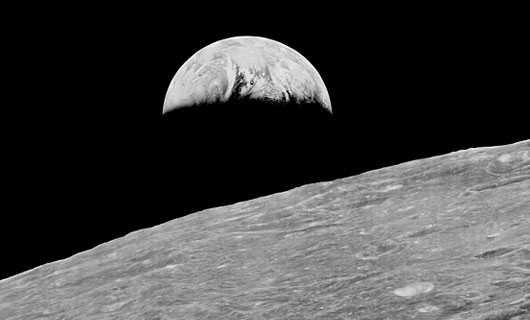
The first image released by the LOIRP, the famous "earthrise image", was made public in November 2008. It is anticipated with the release of this latest image of Copernicus, and further restoration of the original 40 year old hardware, that the pace of additional image releases will now increase.

Further information on the LOIRP can be found at http://www.moonviews.com/

You can follow our image restoration process on Twitter at LunarOrbiter

December 13, 1967

Apollo Landing Site Ellipse II-P-6

Ellipse II-P-6, located in western Mare Tranquillitatis. The center coordinates for the ellipse are 00 degrees 45 minutes north longitude and 23 degrees 37 minutes east latitude. It was the sixth primary site photographed by Lunar Orbiter II. Surveyor V landed approximately 26 kilometers to the north-northwest from the center of the ellipse.

Apollo Landing Site Ellipse II-P-2

Photograph of surface of moon showing eastern Mare Tranquillitatis Description: Ellipse II-P-2, located in eastern Mare Tranquillitatis. The center coordinates for the ellipse are 2 degress 40 minutes north longitude and 34 degrees 00 minutes east latitude. It was the second primary site photographed by Lunar Orbiter II. It is the eastern most of the Set C Mission I sites.

Apollo Landing Site Ellipse II-P-11

Ellipse II-P-11, located in Oceanus Procellarum. The center coordinates for the ellipse are 3 degrees 30 minutes south longitude and 36 degrees 25 minutes west latitude. It was the eleventh primary site photographed by Lunar Orbiter II. It is the southern most of the Set C Mission I sites.

Apollo Landing Site Ellipse II-P-13

Ellipse II-P-13, located in Oceanus Procellarum. The center coordinates for the ellipse are 1 degree 40 minutes north longitude and 41 degrees 40 minutes west latitude. It was the thirteenth and last primary site photographed by Lunar Orbiter II. It is the western most of the Set C Mission I sites.

Apollo Landing Site Ellipse II-P-8

Ellipse II-P-8, located in Sinus Medii near the center of the moon. The center coordinates for the ellipse are 0 degrees 25 minutes north longitude and 1 degree 20 minutes west latitude. It was the eighth primary site photographed by Lunar Orbiter II. Surveyor VI landed approximately five kilometers to the northwest from the center of the ellipse.

January 13, 1967

Lunar Orbiter 2 postal covers

November 25, 1966

Lunar Orbiter II Mission

The Lunar Orbiter 2 spacecraft was designed primarily to photograph smooth areas of the lunar surface for selection and verification of safe landing sites for the Surveyor and Apollo missions. It was also equipped to collect selenodetic, radiation intensity, and micrometeoroid impact data.

The spacecraft was placed in a cislunar trajectory and injected into an elliptical near-equatorial lunar orbit for data acquisition after 92.5 hours flight time. The initial orbit was 196 by 1,850 kilometres (122 1,150 mi) at an inclination of 11.8 degrees. The perilune was lowered to 49.7 kilometres (30.9 mi) five days later after 33 orbits. A failure of the amplifier on the final day of readout, December 7, resulted in the loss of six photographs. On December 8, 1966 the inclination was altered to 17.5 degrees to provide new data on lunar gravity.

Continue reading "Lunar Orbiter II Mission" »

Lunar Orbiter 2 Mission

Alternate Names: Lunar Orbiter-B, 02534
Launch Date: 1966-11-06
Launch Vehicle: Atlas-Agena D
Launch Site: Cape Canaveral, United States
Mass: 385.6 kg
Nominal Power: 375.0 W
Launch/Orbital information for Lunar Orbiter 2
Experiments on Lunar Orbiter 2
Data collections from Lunar Orbiter 2

Description

The Lunar Orbiter 2 spacecraft was designed primarily to photograph smooth areas of the lunar surface for selection and verification of safe landing sites for the Surveyor and Apollo missions. It was also equipped to collect selenodetic, radiation intensity, and micrometeoroid impact data. The spacecraft was placed in a cislunar trajectory and injected into an elliptical near-equatorial lunar orbit for data acquisition after 92.5 hours flight time. The initial orbit was 196 km x 1850 km at an inclination of 11.8 degrees. The perilune was lowered to 49.7 km five days later after 33 orbits. A failure of the amplifier on the final day of readout, 7 December, resulted in the loss of six photographs. On 8 December 1966 the inclination was altered to 17.5 degrees to provide new data on lunar gravity.

Continue reading "Lunar Orbiter 2 Mission" »

Space News
- Moontoday.net
- OnOrbit.com
- SpaceRef.com
- NASA Hackspace

About Lunar Orbiter 2 ("II" or "B")

This page contains an archive of all entries posted to MoonViews - Providing Imagery and Data For Lunar Exploration in the Lunar Orbiter 2 ("II" or "B") category. They are listed from oldest to newest.

Lunar Orbiter 1 ("I" or "A") is the previous category.

Lunar Orbiter 3 ("III" or "C") is the next category.

Many more can be found on the main index page or by looking through the archives.

PARTICIPANTS
- NASA ESMD
- NASA IPP
- NASA ARC
- NASA Lunar Science Institute
- SpaceRef Interactive
- SkyCorp
- National Snow and Ice Data Center - USGS
- LPI
- PDS

LUNAR ORBITER
- Overview
- LPI Image Archive
- Documents

LUNAR MISSIONS
Scientific
- Apollo
- ARTEMIS - Chandrayaan-1
- Chandrayaan-2
- Chang'e-1
- Chang'e-2
- Clementine
- GRAIL - Kaguya
- Lunar Reconnaissance Orbiter
- LCROSS
- Luna
- Lunakhod
- Lunar Prospector
- Ranger
- SMART-1
- Surveyor
- Zond

Commercial
- Google Lunar X Prize


Copyright 2008
MoonViews LLC